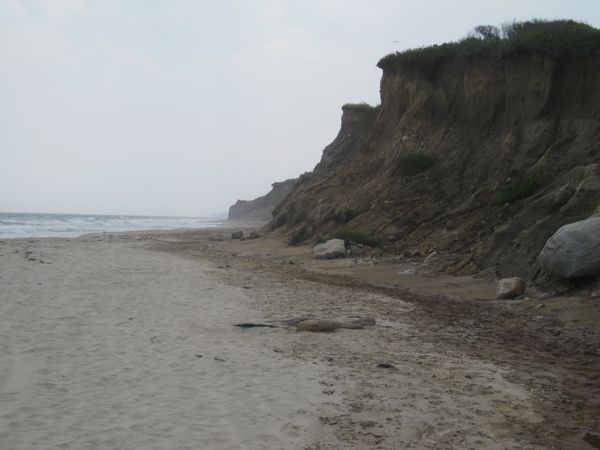
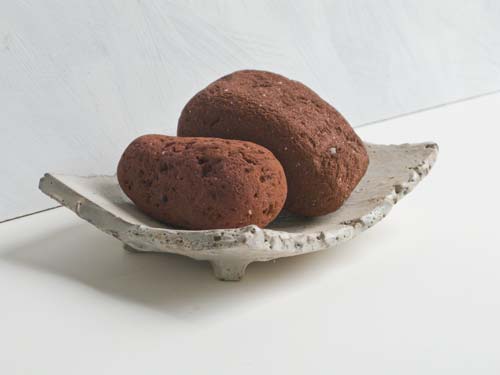
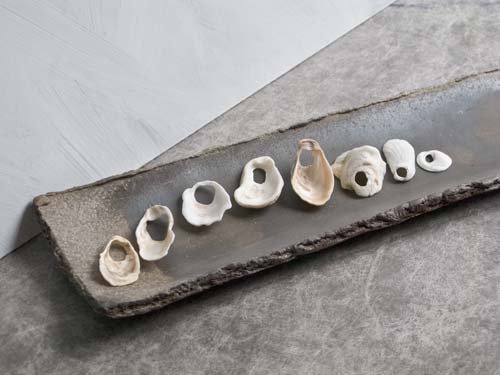
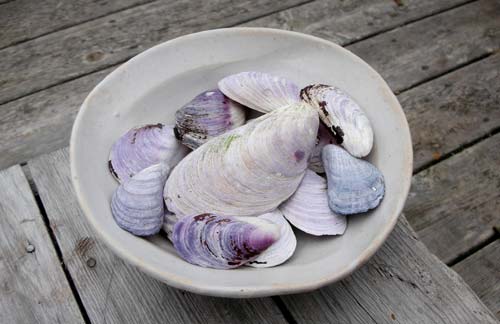
On a recent trip to Rhode Island brushes caught my eye.
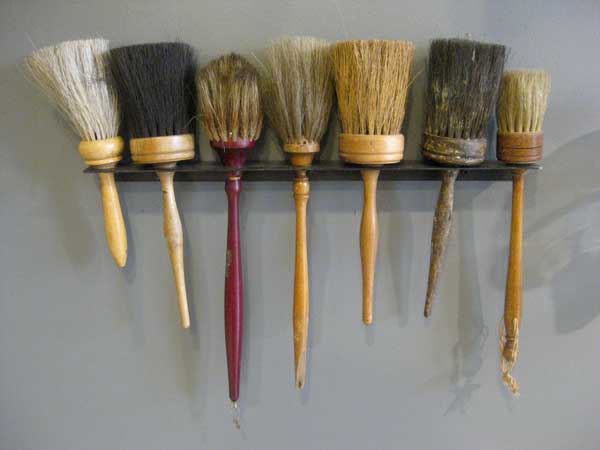 Then, visiting David Harrington in Bristol, he took me to see his studio in a nearby old mill building.
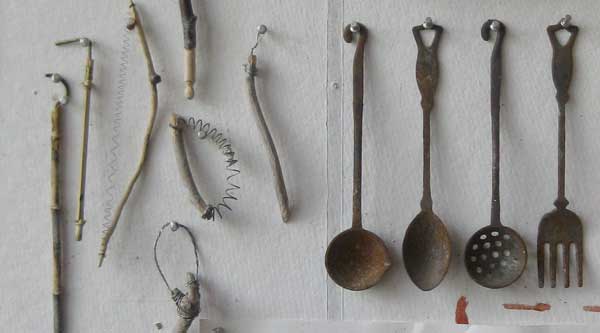 David and his studio mate had a beautiful collection of brushes and tools.
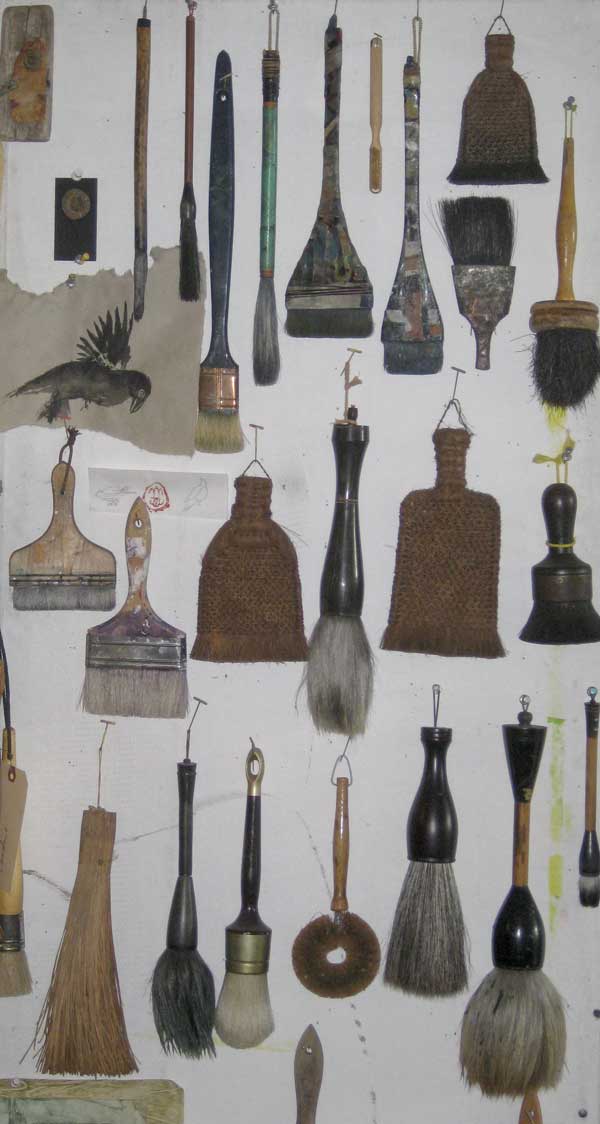 When I got home I looked at my own homemade brushes with a fresh eye.
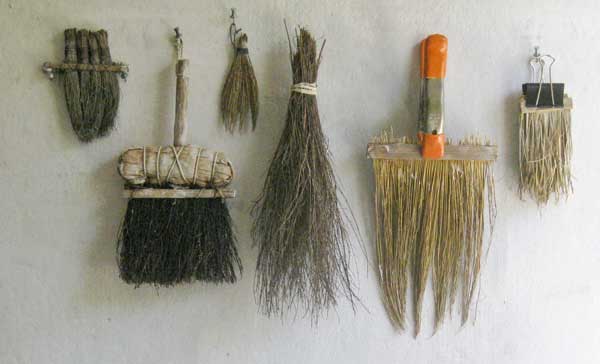
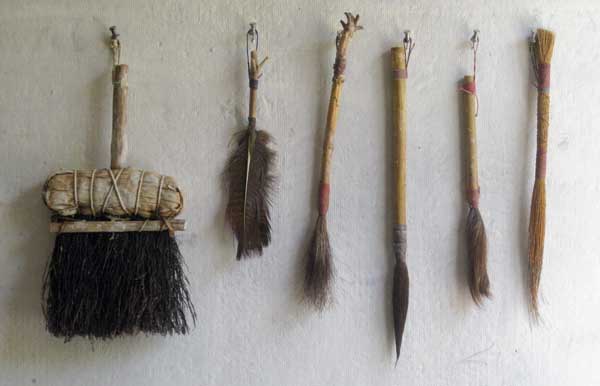 I started making brushes in college. At first I just loved how they looked. I made all of these but the one furthest to the left which I bought on Canal Street (NYC) in 1979 from a street vendor who said he bought it in Afghanistan. The longer I had them around the more committed I became to using them, to finding the voice of collaboration between each brush, a material, and my hand. They are made of my hair, grasses, feathers and animal fur with bamboo for the handle--at least until that binder clip comes in handy.
 "I don't have to lay on the couch and see a therapist
because my therapist is in my paint brushes."
"I don't have to lay on the couch and see a therapist
because my therapist is in my paint brushes."
Abbey Lincoln
Then, visiting David Harrington in Bristol, he took me to see his studio in a nearby old mill building.David and his studio mate had a beautiful collection of brushes and tools.When I got home I looked at my own homemade brushes with a fresh eye.I started making brushes in college. At first I just loved how they looked. I made all of these but the one furthest to the left which I bought on Canal Street (NYC) in 1979 from a street vendor who said he bought it in Afghanistan. The longer I had them around the more committed I became to using them, to finding the voice of collaboration between each brush, a material, and my hand. They are made of my hair, grasses, feathers and animal fur with bamboo for the handle--at least until that binder clip comes in handy."I don't have to lay on the couch and see a therapist
because my therapist is in my paint brushes."Abbey Lincoln